

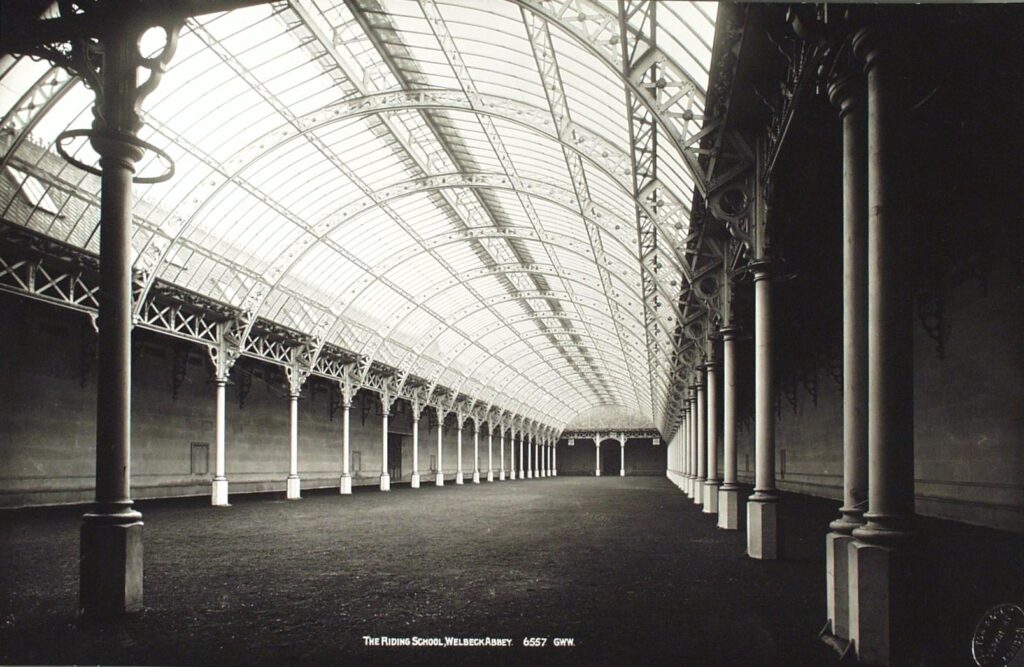
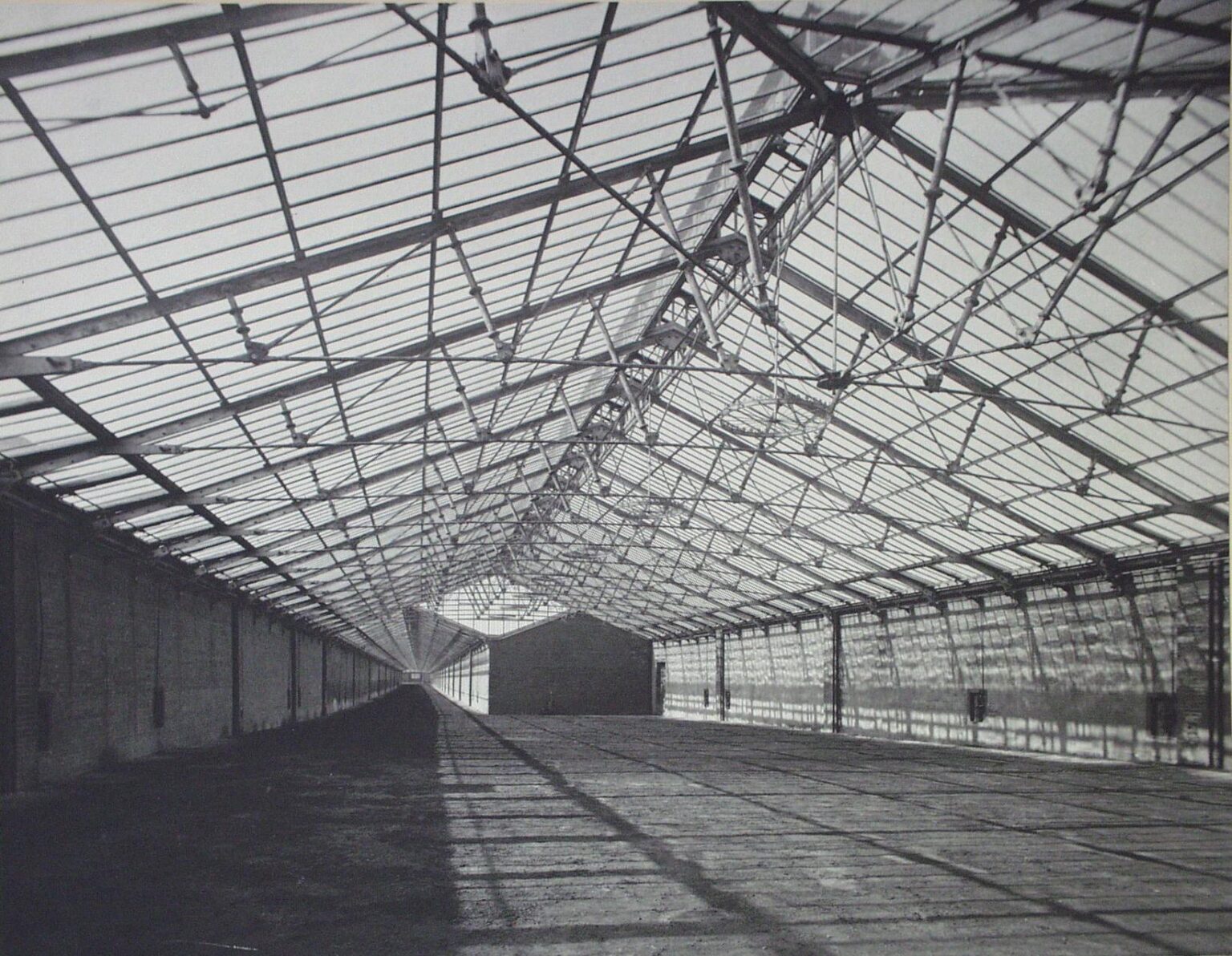
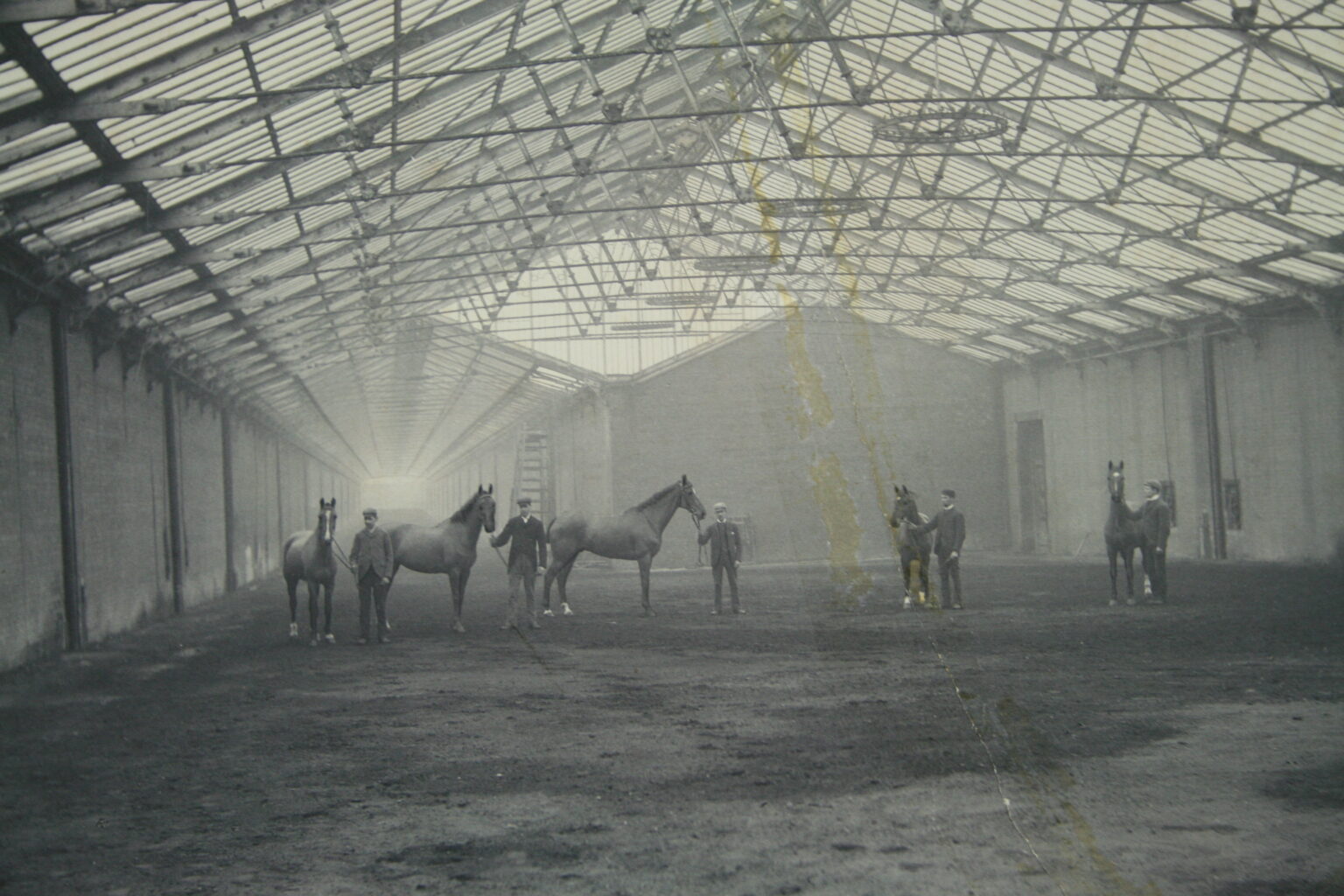
Work on the Tan Gallop began in 1870, during the extraordinary programme of improvements commissioned by William John Cavendish-Scott-Bentinck, the 5th Duke of Portland. Popularly remembered as the “Burrowing Duke”, he transformed Welbeck on a scale unmatched by most Victorian country estates. Above ground, he created a vast equestrian complex. The New Riding School, begun in 1868, was reputedly the second largest in the world when completed. The Tan Gallop followed two years later: a glass-covered corridor measuring 1,270 feet, where horses could be exercised in shelter throughout the year. Its name came from the layer of oak chippings spread across the track, a soft and resilient by-product of tanning that provided a forgiving surface beneath the horses’ feet.
The Duke’s ambitions extended far beyond the equestrian complex. His extensive programme of works included underground rooms and passages, new stable yards, workshops and estate buildings. In 1860, he commissioned a 22-acre kitchen garden, inspired by the 17-acre royal walled gardens at Windsor Great Park and equipped with glasshouses, heating systems and water supplies to support year-round production. The works combined architectural imagination with practical estate management and demanded a substantial labour force. For nearly two decades, Welbeck resembled an immense construction site, with masons, bricklayers, joiners, engineers and labourers testing new ideas in stone, iron, glass and gaslight. The Tan Gallop was therefore not an isolated curiosity, but part of a bold and highly personal vision that reshaped the estate.
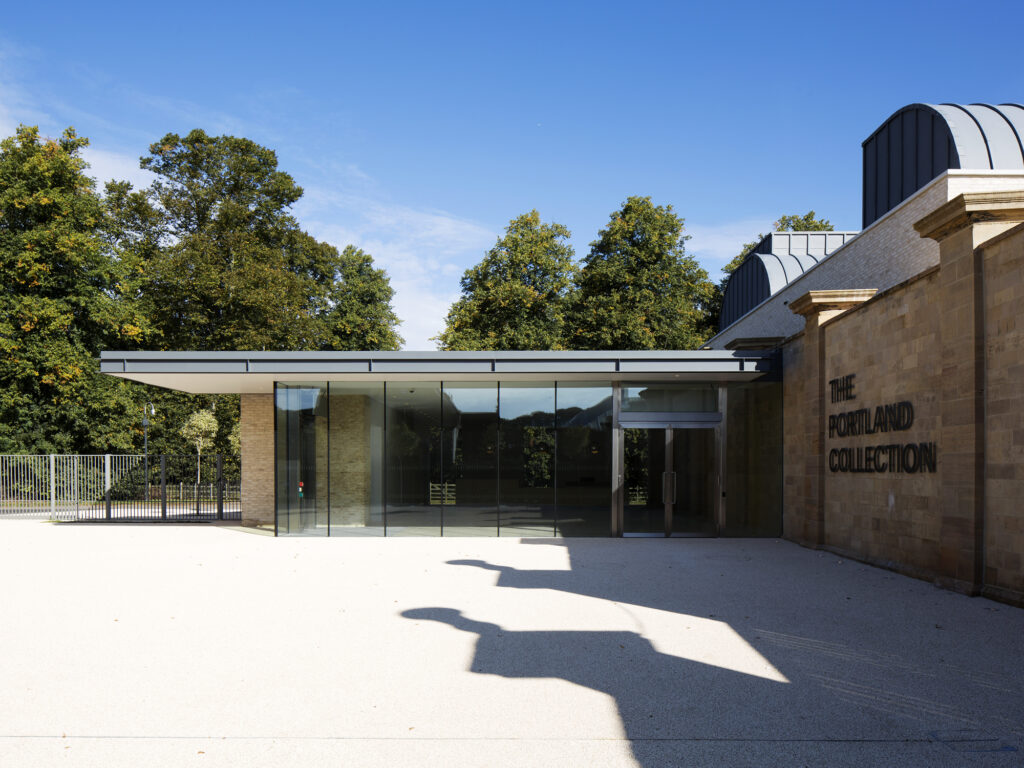
By the early 21st century, the surviving walls offered an extraordinary opportunity: to preserve an evocative fragment of Welbeck’s past while giving it a new public purpose. Following an invited competition in 2012, Hugh Broughton Architects developed a gallery of approximately 890 square metres within the historic enclosure. Rather than imitate the Victorian fabric, the design creates a confident conversation between old and new. Weathered limestone remains visible beside pale handmade Danish brick, glass and pre-patinated zinc, allowing each phase of the building’s story to be read clearly.
A glazed entrance pavilion provides a light, welcoming threshold from the shared courtyard. Beyond it, visitors enter the 22-metre Long Gallery, where an elegant barrel-vaulted roof and full-length rooflight bring soft, diffused daylight onto the portraits below. Oak floors add warmth, while a glittering display of gold and silver draws the eye towards smaller, more intimate galleries. These changing spaces were carefully calibrated for an unusually varied collection, from large oil paintings and tapestries to sculpture, jewellery and delicate miniatures.
The museum opened to the public in March 2016, giving far wider access to treasures assembled by the Cavendish-Bentinck family over more than 400 years. The Portland Collection comprises thousands of objects, including works associated with Michelangelo, Van Dyck and George Stubbs, alongside furniture, books, silver and personal relics such as the pearl earring worn by Charles I at his execution. Rotating displays allow fresh stories to emerge from this vast and richly layered inheritance.
The transformation has been recognised with major architectural honours, including the 2016 RIBA East Midlands Building of the Year and Conservation Award. Yet its greatest achievement is experiential. The museum does not erase the Tan Gallop’s former life; it lets history remain present in its walls, proportions and materials. A place once devoted to speed and training now invites visitors to pause, look closely and encounter centuries of art and history. It is a characteristically Welbeck reinvention: imaginative, respectful and rooted in the estate’s extraordinary past.
Cat Storey is the Welbeck Estate Marketing Manager, bringing with her a decade of marketing experience. With a strong foundation in the arts, Cat holds a Master’s degree in Fine Art from Nottingham Trent University, a background that inspires her creative marketing and strategic approach. Cat has a particular passion for crafting compelling stories around the local history of the estate, weaving narratives that engage audiences and celebrate Welbeck’s rich heritage. Her unique blend of artistic vision, storytelling, and marketing expertise enables her to tell stories that resonate with the community and beyond.