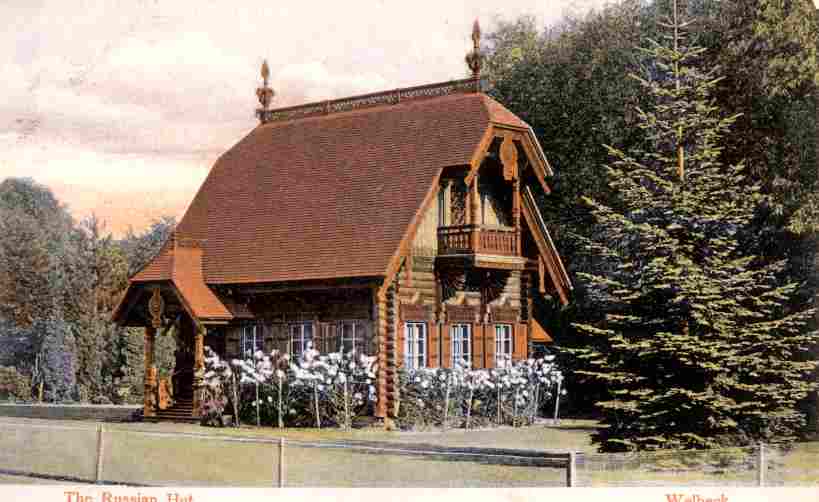
Much of Welbeck's scenic splendour owes its existence to the genius of Humphry Repton. He worked with the 3rd Duke of Portland for over twenty years and produced three Red Books for Welbeck. Repton's proposals for Welbeck were among his first large-scale projects, and they helped establish his reputation. Repton’s intervention at Welbeck marked a significant moment in the evolution of English landscapes, marrying the grandeur of nature with the subtleties of human imagination.
Humphry Repton succeeded the legendary Capability Brown, inheriting both his mantle and his audacious ambition. While Brown’s designs were sweeping and naturalistic, Repton’s approach was more nuanced, focusing on the interplay between natural beauty and the comforts of modern life. His “Red Books”—personalised portfolios presented to estate owners—combined evocative sketches and written proposals, vividly illustrating his vision for transformation. For Welbeck Abbey, Repton produced one such book in 1790, proposing alterations that would elevate the estate’s aesthetic and functional appeal.
Repton’s design philosophy at Welbeck was rooted in the concept of “the picturesque.” He sought to create harmonious compositions where woodland, open parkland, and water features danced together in visual rhythm. His plans included sweeping lawns, carefully planned tree plantations, and serpentine lakes, all intended to frame and accentuate the stately presence of the Abbey itself. Repton paid particular attention to the approach routes, ensuring that visitors would experience a sequence of unfolding views—each more captivating than the last—culminating in the dramatic reveal of the house. The landscape thus became a living theatre, orchestrated to evoke wonder and delight.
Beyond aesthetics, Repton was keenly aware of practical needs. His designs at Welbeck incorporated productive elements: kitchen gardens, discreetly screened by foliage, and avenues for carriage travel. He understood that pleasure and utility could coexist, and his landscape was as much a working estate as a work of art.
Today, Welbeck’s grounds retain the spirit of Repton’s vision. Mature woodlands stretch across the horizon, tranquil lakes reflect the ever-changing sky, and the stately Abbey sits ensconced amid verdant lawns. Although time has inevitably altered some features, the core principles of Repton’s design—variety, harmony, and theatricality—endure. Welbeck’s historic landscape thus stands not only as a monument to an era of taste and refinement but as a living legacy to Humphry Repton’s enduring genius.