

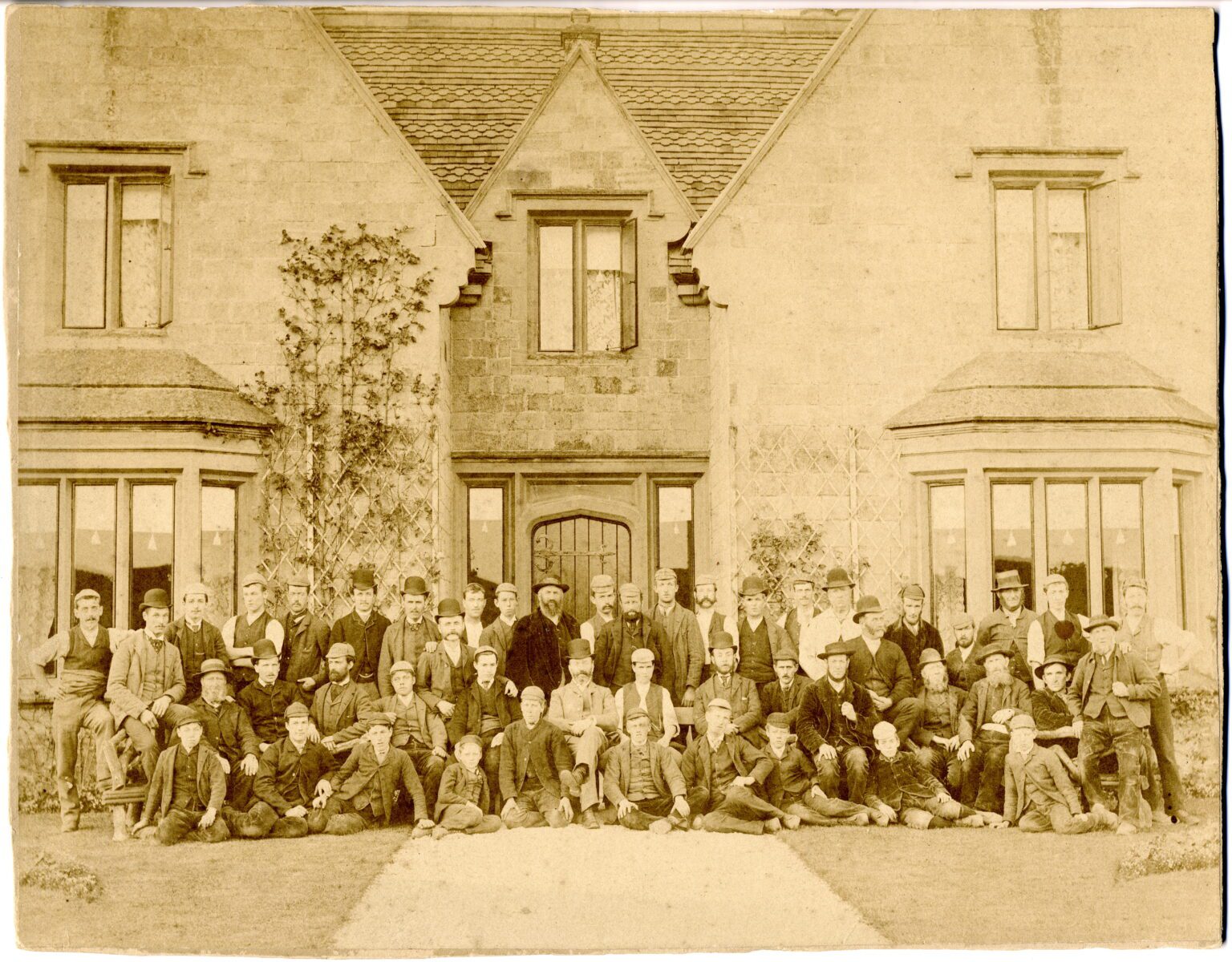
In January 2026, we launched a new feature on the Welbeck website. It is a free-to-access database which lists the names and details of over 1,000 people who lived and worked on the Estate between the 17th and mid-20th century.
Around half of all enquiries we receive in the Curatorial Department are from family history researchers who want to know about their ancestors’ lives at Welbeck. The database began about 10 years ago as an internal resource to help reply to these enquiries and keep track of new information received from the public.
When I started working at Welbeck in 2019, I inherited the database as a side project. Previous colleagues had made a great start. It already had about 700 entries which were taken from sources including group photographs of long-service employees and programmes from estate events, including the 1939 Welbeck Pageant and a Sports Day in 1904.
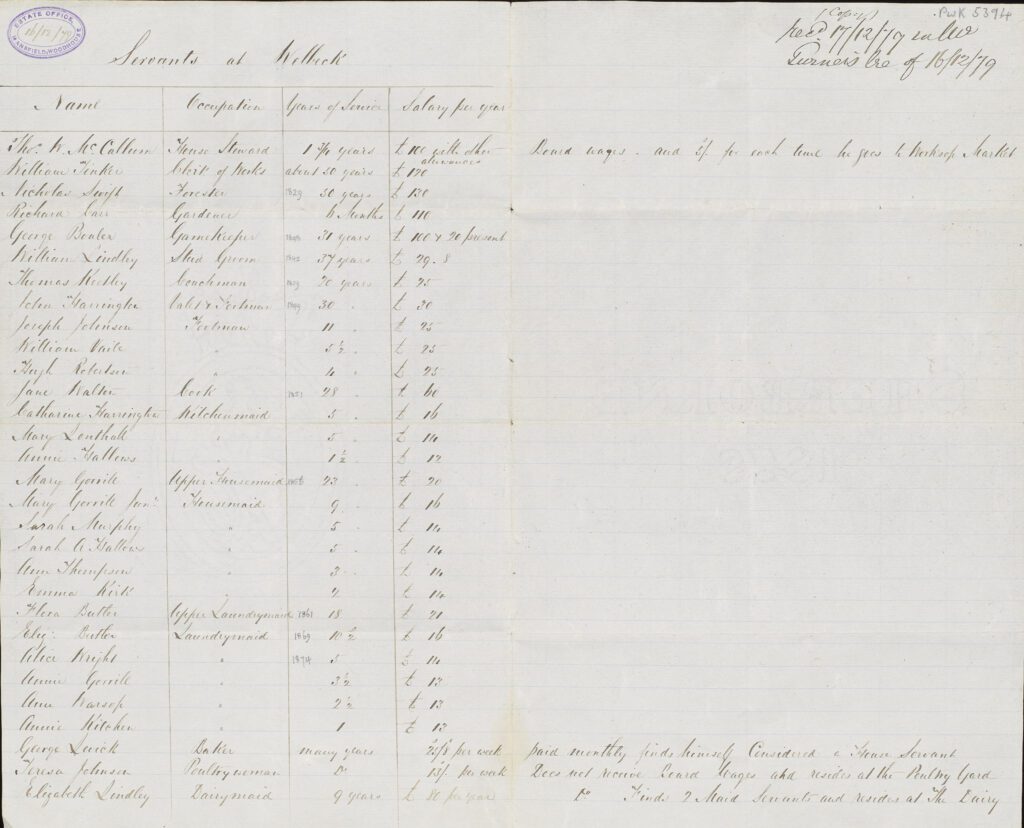
To those names, I added entries from census records, diaries, letters, and material from the University of Nottingham Special Collections and Manuscripts, which holds much of Welbeck’s historic archive. Unfortunately, almost all the staff wage books and household accounts have been lost or destroyed over the years, so finding names requires some lateral thinking.
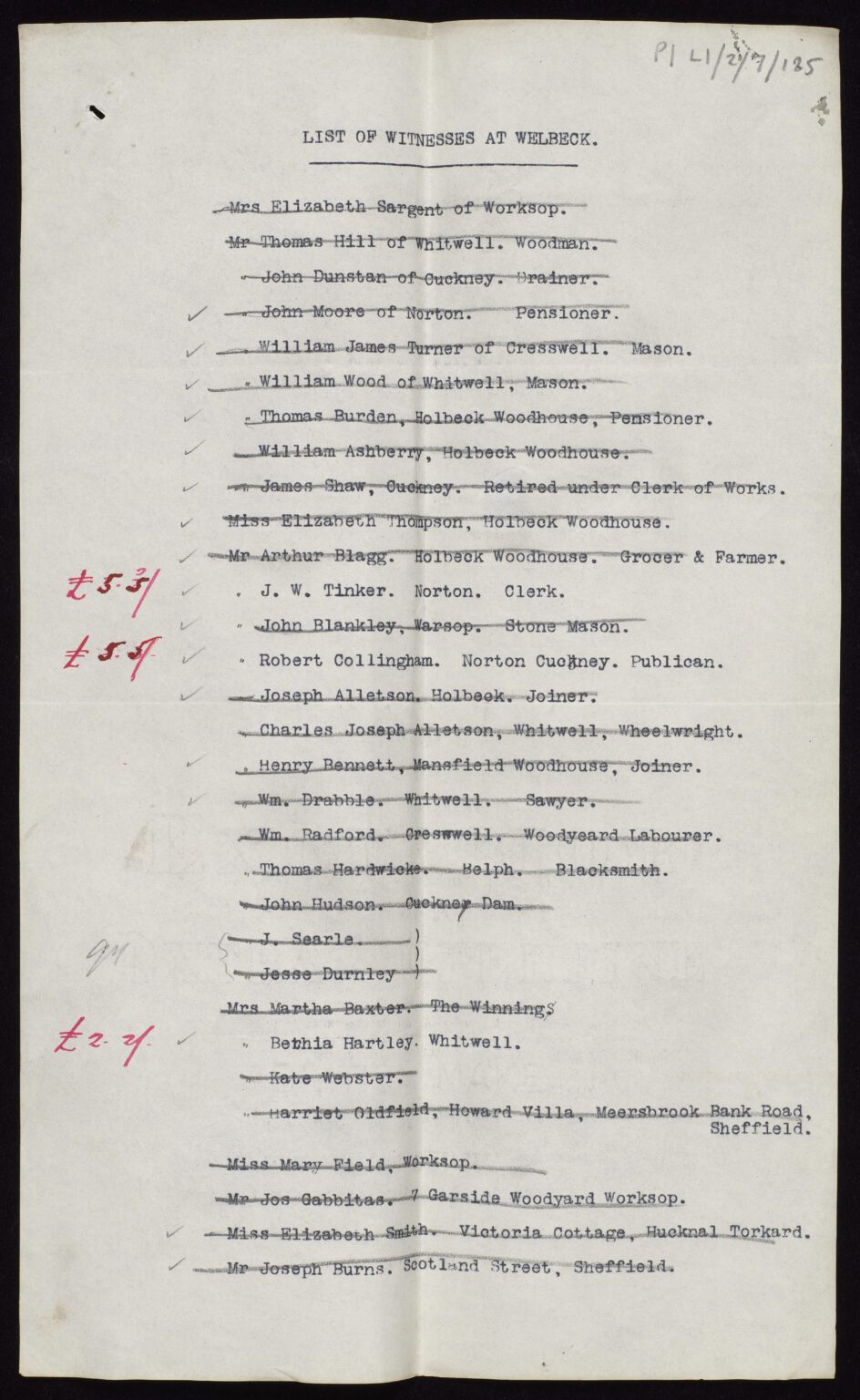
One of my favourite sources of names was in the material relating to the ‘Druce Case’, in which a woman falsely claimed that her son was related to the ‘tunneling’ 5th Duke of Portland, and was therefore the rightful heir to his immense estate. You can read more about the Druce Case here: The Druce Case - The University of Nottingham. The 6th Duke of Portland, in response to the claim, sent his agents out to gather evidence by interviewing former Welbeck staff and servants who had known his reclusive predecessor. The witnesses themselves have been added to the list, along with many of the people that they mention in their statements.
The witnesses include William Drabble, who started work at Welbeck in 1848 when he was 10 years old. He was employed as a shepherd boy to keep the sheep away from the windows at the Abbey, and remembered that the 4th Duke of Portland (known affectionately by locals as ‘Leather Britches’) used to tap at the window and give him a cup of tea or milk and biscuits. He later became a sawyer, employed on the 5th Duke’s extensive building works.
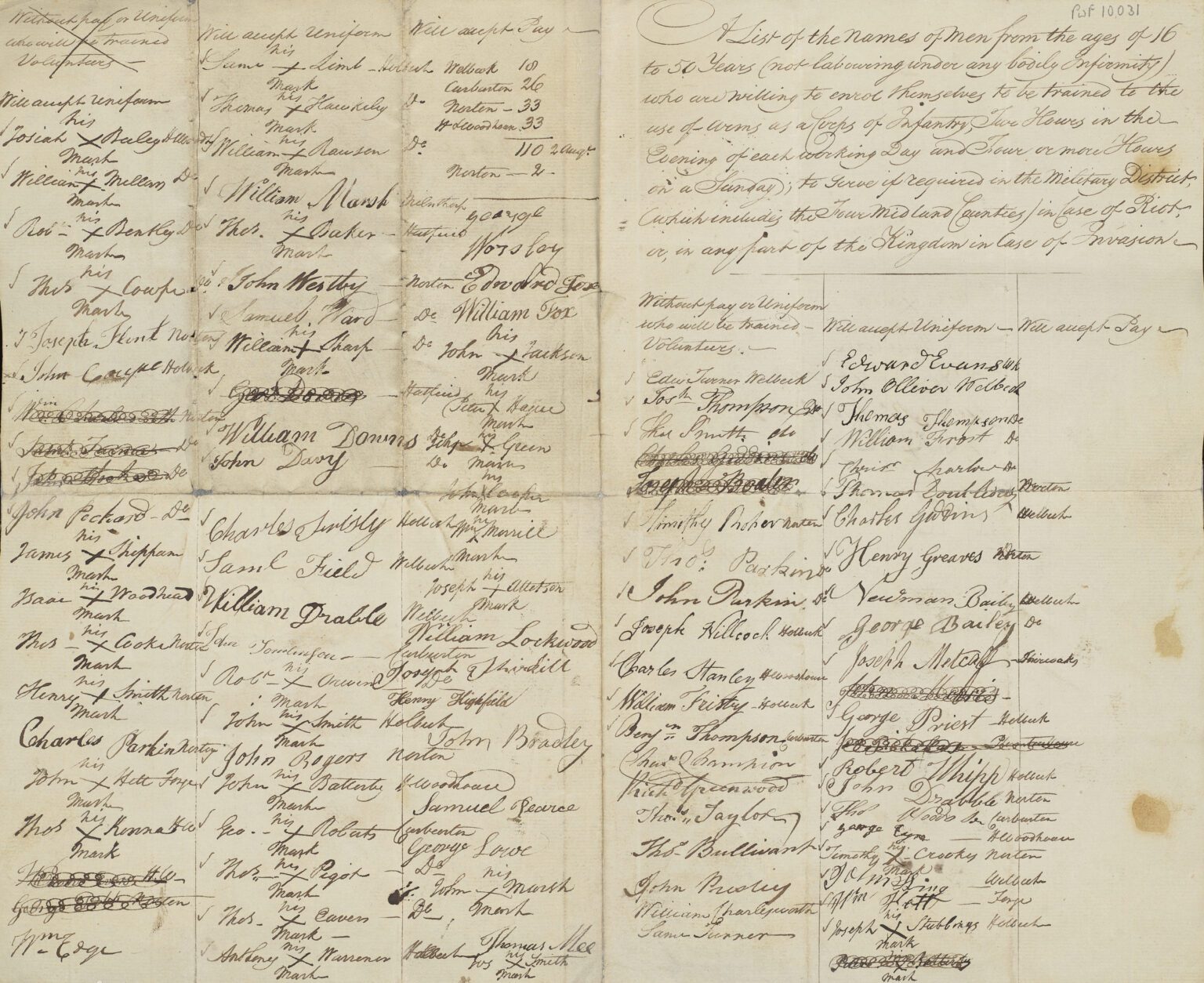
In the summer of 2025, we welcomed Georgia Newton, who came to us on work experience for eight weeks. She added more names to the list from newspaper stories and militia lists. These record the names of men on the estate who signed up as volunteers in the early 19th century to fight in case of public riots or invasion by Napoleonic forces.
In February 2026, we look forward to being joined by University of Sheffield MA student Emilia Crawley, who will take over the database until May. As well as adding names from historical records, Emilia will be answering emails and adding names submitted by members of the public. If you notice anyone missing from the list or have any additional information about someone listed, please email researcher@welbeck.co.uk.
Thank you to everyone who has contributed to the database so far, and to the University of Nottingham, the University of Sheffield and Nottinghamshire Archives for supporting this project.
Over the course of Welbeck’s history, thousands of people have worked or lived on the Welbeck Estate.
Our Curatorial Department have compiled a database that lists staff and servants dating back to the 17th century.

Dr Lauren Batt
Lauren is a historian and Curator at Welbeck Abbey. Her experience includes historical research for Gucci, and projects at Chatsworth, Hardwick Hall, and Derby Museums.