

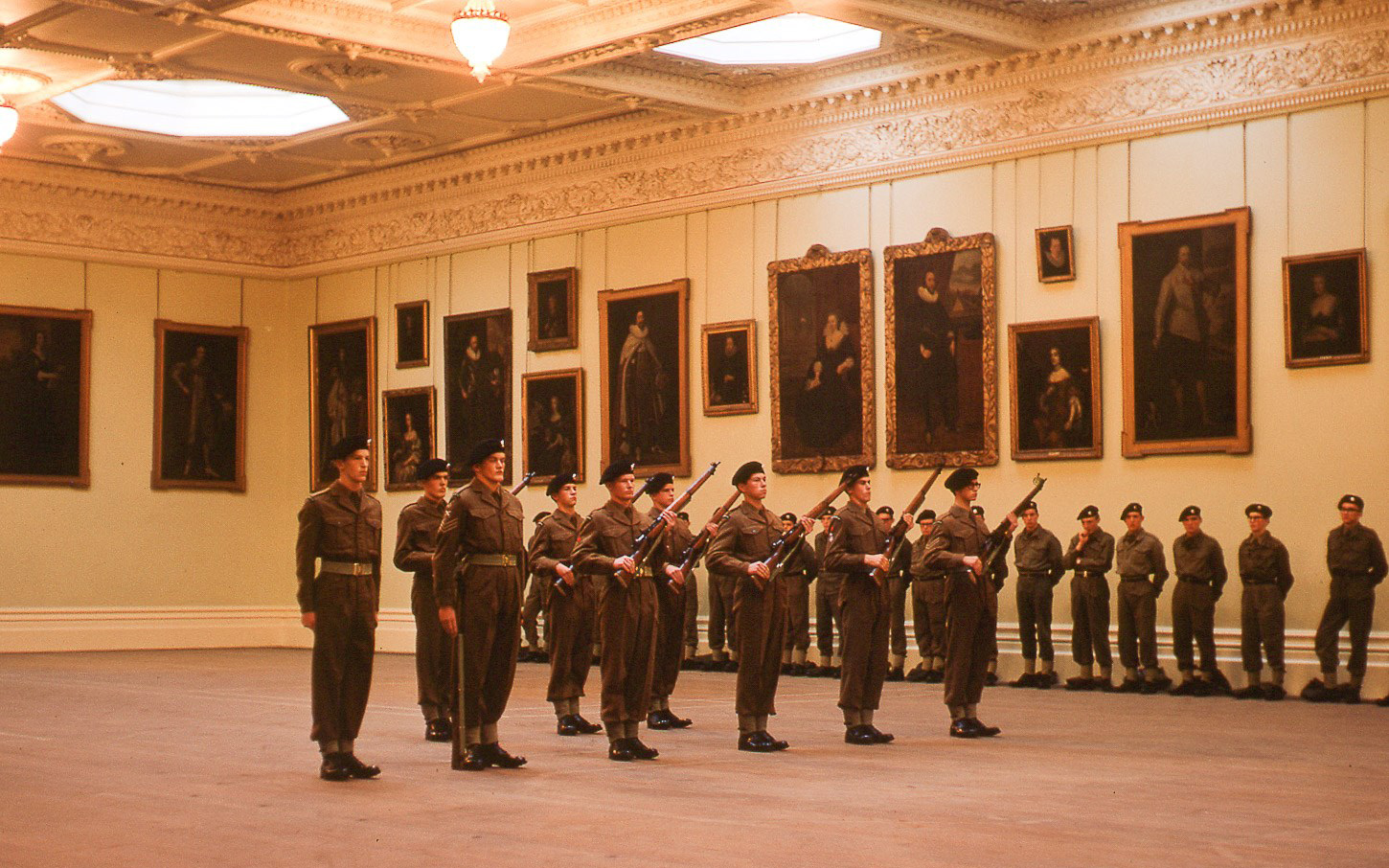
Welbeck Abbey carries centuries of history within its grand walls. While it is often celebrated for its aristocratic roots and architectural wonders, one particularly significant chapter began with its transformation into a school under the auspices of the Ministry of Defence (MOD). This era, spanning the mid-twentieth century into the early twenty-first, saw Welbeck Abbey repurposed to nurture bright young minds destined for technical and engineering roles within the British Armed Forces.
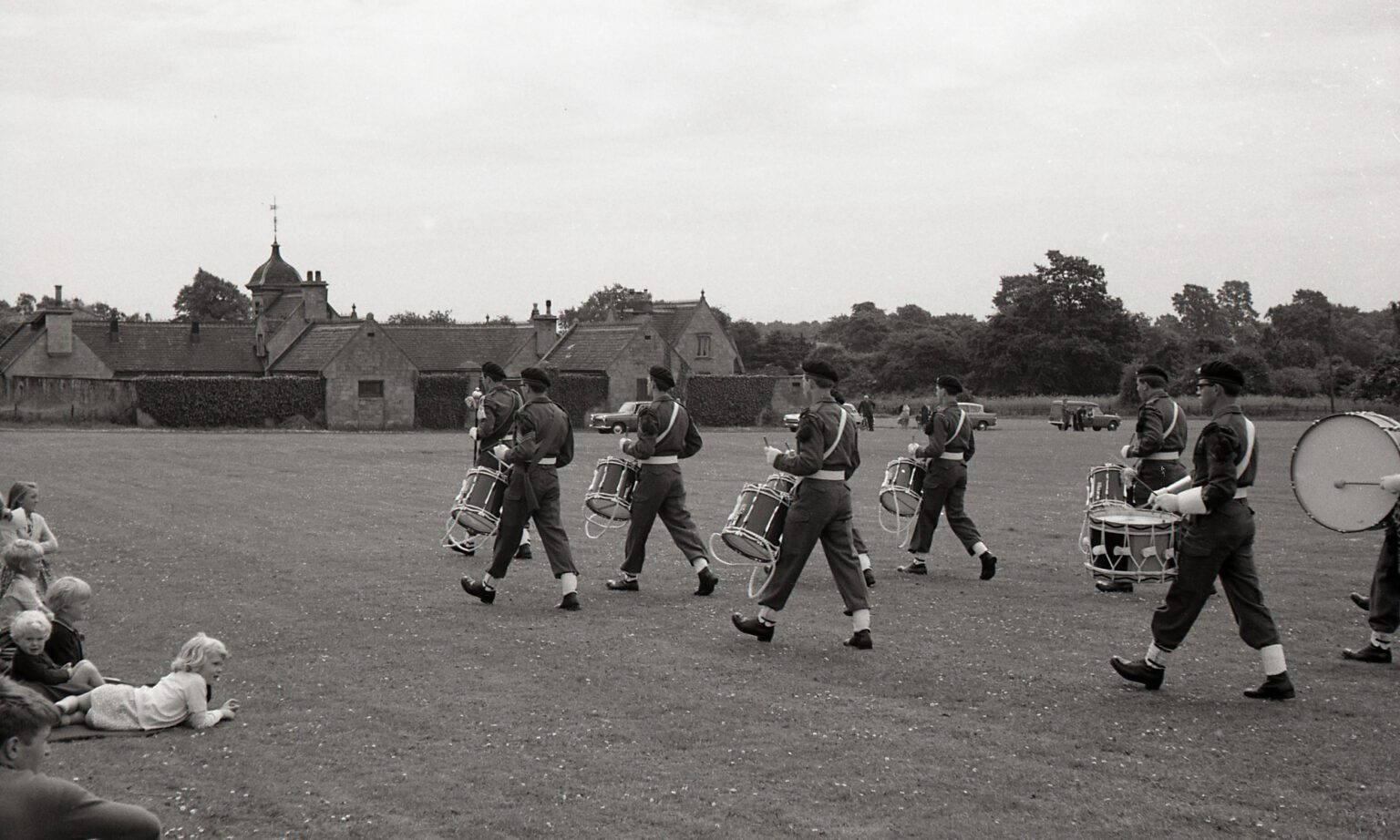
The MOD’s involvement at Welbeck Abbey commenced in 1939, with the outbreak of WWII. The estate became a training ground, first for cavalry regiments, and then for artillery and tank regiments.
In 1945, Welbeck was taken over by the Army Education Corps as the Northern Command Formation College, for the training of up to 450 demobbed soldiers in trades such as plumbing, but also in arts and photography. There were also 50 spaces reserved for members of the female ATS (Auxiliary Territorial Service). The men camped in the grounds while the women stayed in the Abbey itself. The courses lasted for 1 month. They were designed to ease soldiers back into civilian life and prepare them with skills for the job market.
Welbeck College was formed in September 1953, building on the success of the previous college. The College’s creation was part of a broader government initiative to address the growing need for scientifically trained officers in the military. Young men—later joined by young women—who displayed exceptional academic potential, particularly in mathematics and the sciences, were recruited to study for their A-levels in preparation for future entry into the UK’s top military academies, such as the Royal Military Academy Sandhurst, Britannia Royal Naval College, and the Royal Air Force College Cranwell.
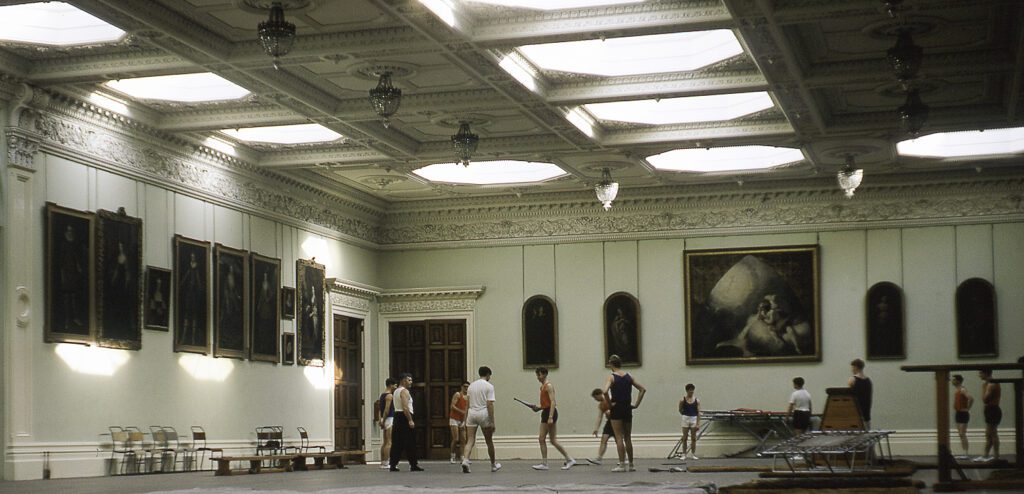
Welbeck College quickly established a reputation for academic rigor and discipline. Students, known as “Welbexians,” lived and learned in a unique environment where the traditions of the stately home met the demands of military training and technical education. The curriculum balanced advanced civilian studies with leadership, fitness, and service ethos. Outside the classroom, the vast grounds of Welbeck Abbey provided the perfect backdrop for sport, adventure training, and cultivating camaraderie.
The Abbey itself shaped the character of the school. Its cavernous halls, historic tunnels, and tranquil parkland offered both inspiration and a sense of continuity. Students were constantly reminded of their custodianship of tradition and their responsibility to serve.
Welbeck Defence Sixth Form College remained at Welbeck Abbey until 2005, when the school relocated to a purpose-built campus in Leicestershire. Nevertheless, its decades at the Abbey left an indelible mark, blending the legacy of British military education with the story of one of England’s great country houses. This chapter stands as a testament to the adaptability of Welbeck Abbey and its enduring role in shaping leaders for generations.

With special thanks to Bill Gore.
Cat Storey is the Welbeck Estate Marketing Manager, bringing with her a decade of marketing experience. With a strong foundation in the arts, Cat holds a Master’s degree in Fine Art from Nottingham Trent University, a background that inspires her creative marketing and strategic approach. Cat has a particular passion for crafting compelling stories around the local history of the estate, weaving narratives that engage audiences and celebrate Welbeck’s rich heritage. Her unique blend of artistic vision, storytelling, and marketing expertise enables her to tell stories that resonate with the community and beyond.