

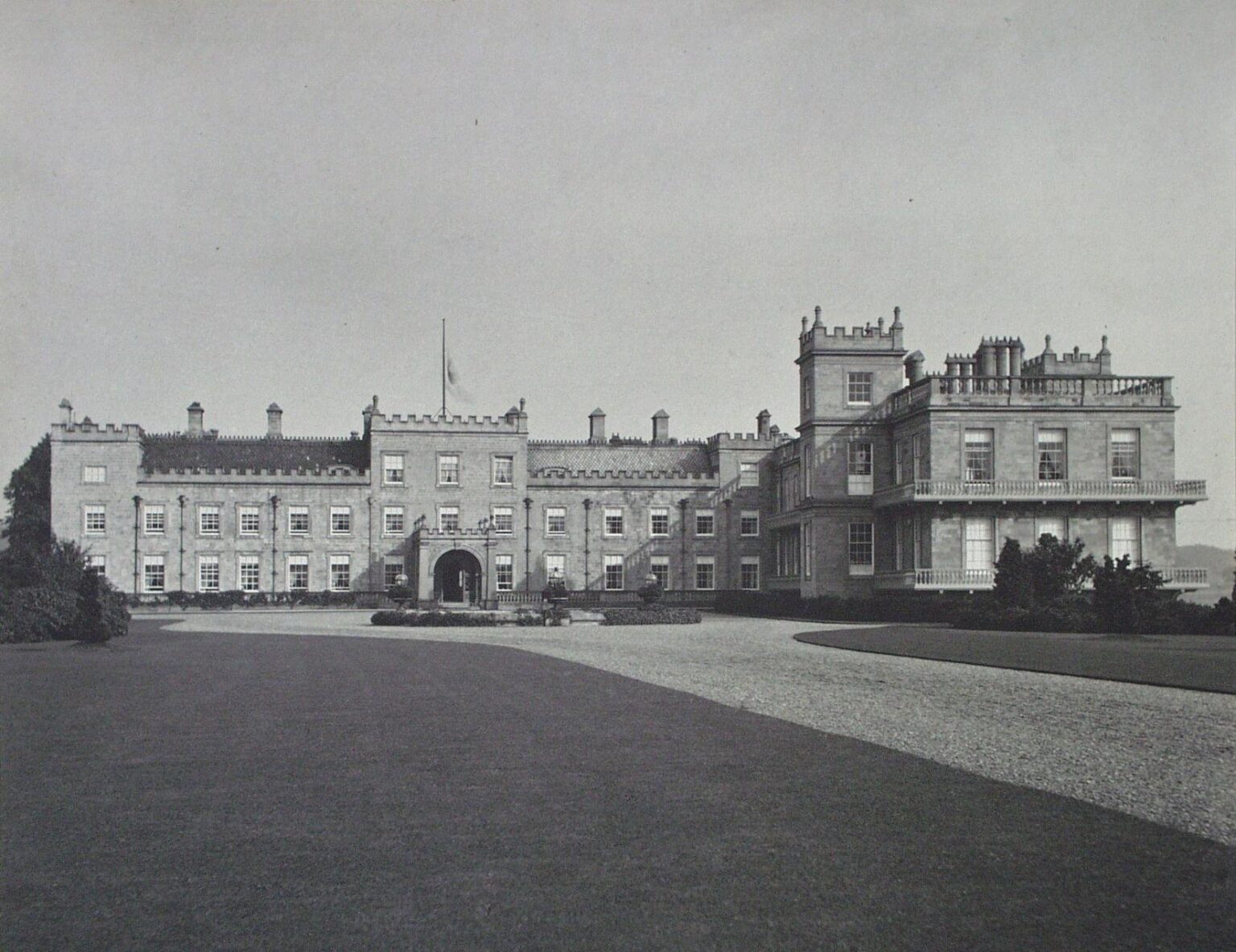
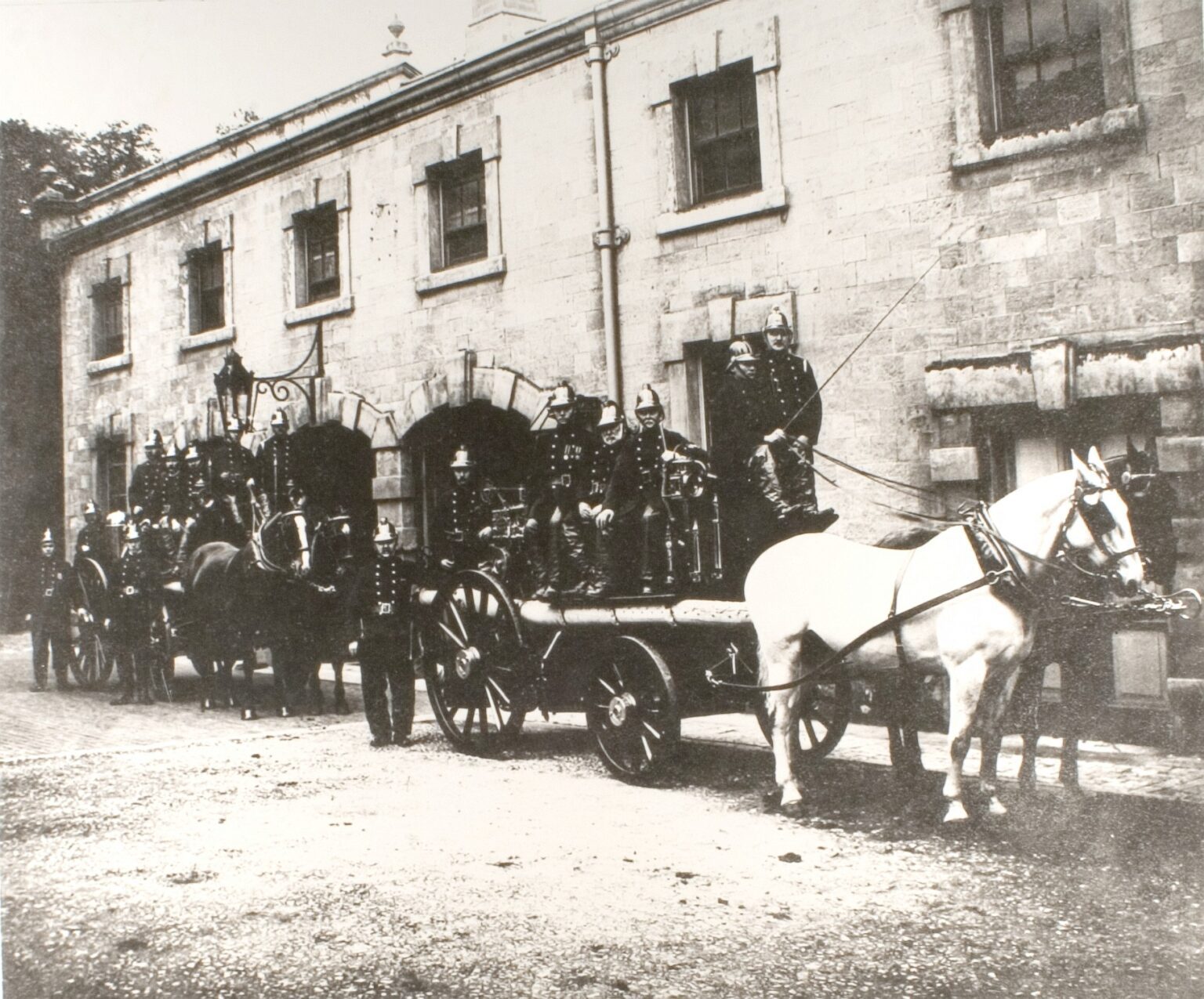
While the fire itself caused significant damage, it was the vast amounts of water used to extinguish it that did the most harm to the structure and its contents. However, the fire could have been far more devastating. Many priceless artworks and furnishings were saved, thanks to the quick actions of the estate's fire department and a loyal community of workers who bravely climbed through windows to carry items to safety on the lawns. The estate fire department also prevented the blaze from spreading to the adjoining Old Wing and largely saved the fabric of the Oxford Wing. Newspapers at the time excitedly predicted that the whole wing would need to be rebuilt, but photographs and plans show that the main structure was protected.
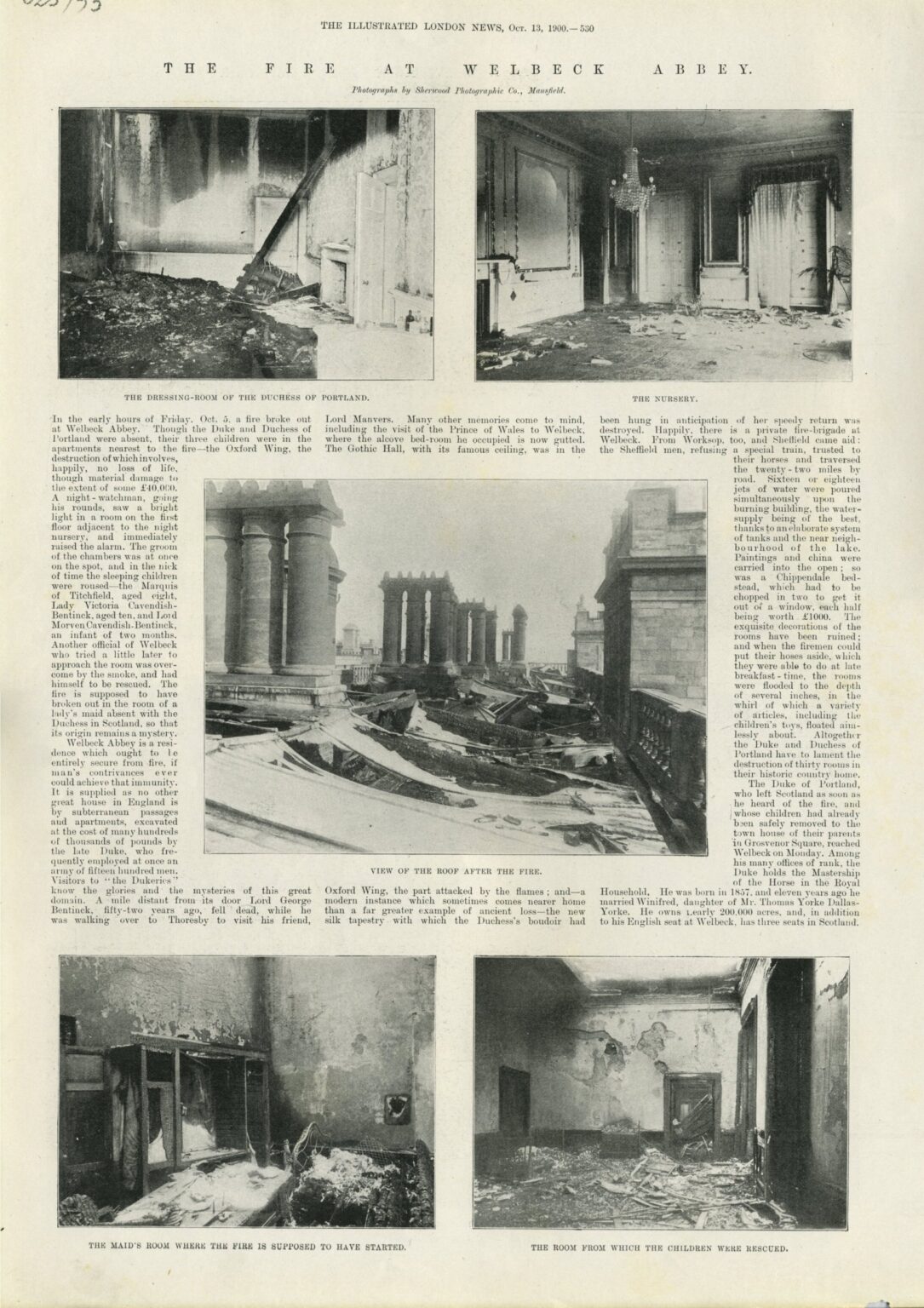
The swift and heroic actions of the estate staff ensured that no one was injured or killed. One individual, however, stands out: Mary Ann Marshall, the housekeeper from Alnwick, Northumberland. Discovering the fire dangerously close to the nursery, Mary was driven back by thick smoke in the main corridor. With incredible presence of mind, she found another route, turning back down the stairs to ascend again via the luggage entrance. There, she safely rescued the three young children of the Duke and Duchess: 10-year-old Victoria, 7-year-old William, and 3-month-old Francis.
Lady Victoria later recalled a charming detail from the aftermath:
"On our return to Welbeck, we found the upper part of the Oxford wing completely burnt, and other parts of the building so saturated with water... Our tortoise was found swimming about in the bath in the day-nursery next day, none the worse...".
The Duchess expressed her profound gratitude in a letter to Mary, writing,
“As you say, one must not mind anything when the dear babies were so mercifully protected. I know how hard you must have worked, & I hear on all sides what wonderful presence of mind you showed & what power, & the Duke & I thank you with all our hearts.”
Mary’s relationship with the Duke and Duchess remained very close for the rest of her life. Every servants’ ball in the Underground Ballroom was opened by Mary dancing with the Duke, and her letters from the Duchess are affectionately addressed to ‘Ma’. When the time came for Mary to retire in 1923, the ever-grateful Duchess told her,
“You must just come to your own home Welbeck whenever you feel you want to. You have your own room, & you will always receive a warm welcome from us all. Anything in the world I can do to make you happy & well, you have only to express the wish!”.
Mary moved to London to be with her family, who nicknamed her ‘The Great Northern’ due to her strict discipline. She died in 1930, leaving effects in her will worth £2318 1s 4d, the equivalent of over £100,000 today. Among her belongings was a collection of brooches gifted to her by guests of the Duke and Duchess, including the kings of England, Spain and Norway, and Archduke Franz Ferdinand.
The Duke and Duchess had previously moved out to Cuckney House in 1890, when builders were busy undertaking extensive Arts and Crafts-style alterations to the Old Riding School and the curved servants’ wing. Now, hastened by the fire, they made plans for further modernisation at the Abbey. They embarked on a large-scale renovation project, commissioning the distinguished architect Sir Ernest George to lead the works. The goal was to remodel the Oxford Wing to better suit the demands of an Edwardian English country house.
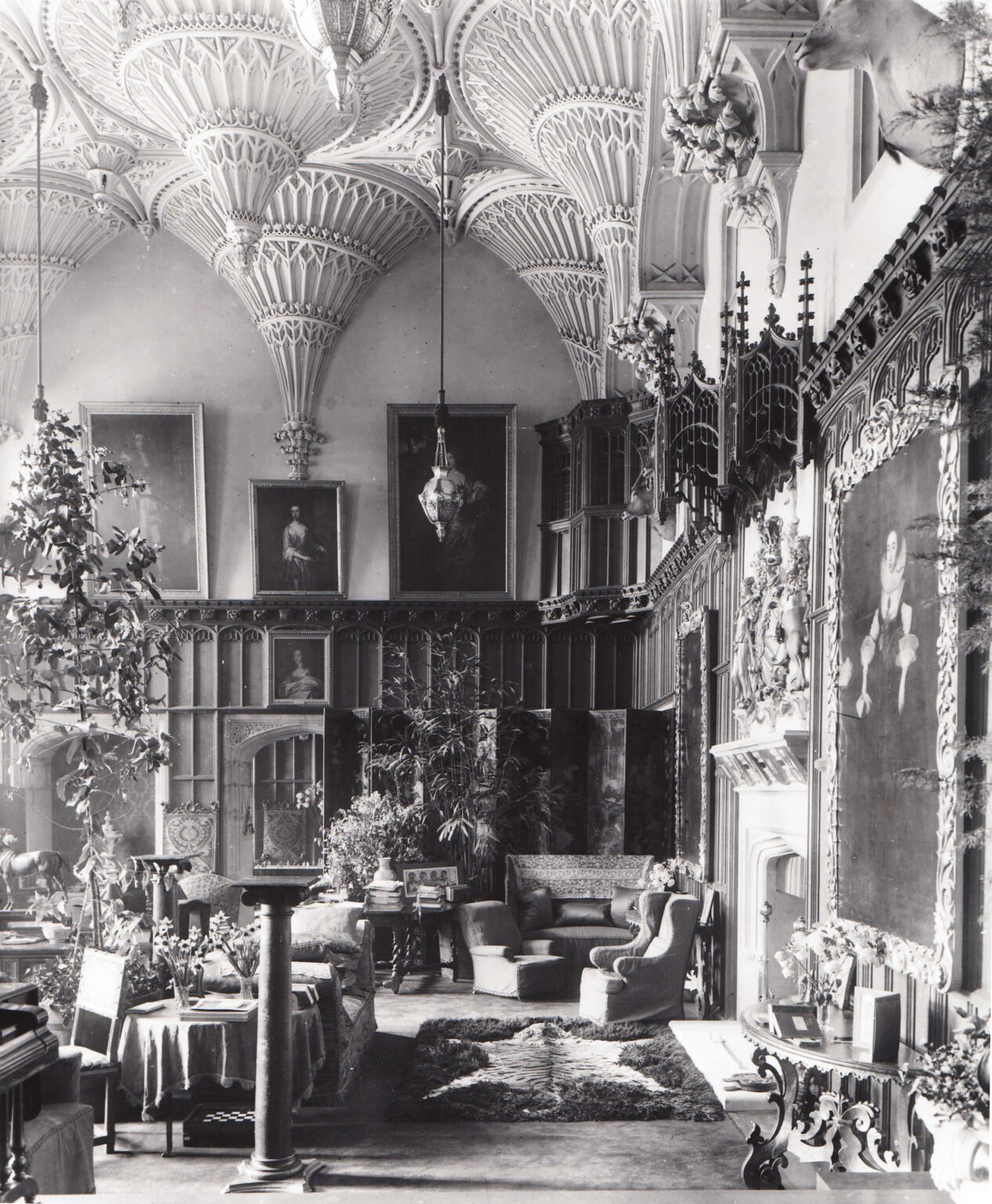
A recent discovery in the archives shows that the Duke had plans for an even more extensive modernisation. Clearly not a fan of the Gothic revival style, he put out a tender for quotes to replace the magnificent 18th-century plasterwork ceiling in the Gothic Hall. Thankfully, it was decided that it would be too expensive.
This period was a transformative time for British society, largely due to the invention of the motor car, which allowed for more frequent and shorter visits. The Duke and Duchess Winifred, keen entertainers, created spaces that were not only grand but also perfectly suited for informal social gatherings and royal visits. The fire, although devastating, ultimately became the catalyst for a modernising transformation.
The 6th Duke of Portland appears to have been rather relaxed about the news of the fire. In his memoir, he recounts receiving the telegram from his agent while at Langwell, a morning he had planned for hunting. He wrote,
"...Mr. Turner reported that the children, who had left Langwell for Welbeck a short time before, were quite safe and had gone to London... As there was nothing else I could do, I went out stalking...".
Nor did the Duke and Duchess allow the fire to disrupt their busy social calendar. While works were ongoing at Welbeck, they took up residence at nearby Cuckney House and continued to entertain on a grand scale. In August 1902, for example, they hosted a large house party there including Viscount Kitchener, Viscount Downe and the Earl of Coventry.
The Duke and Duchess had previously moved out to Cuckney House in 1890, when builders were busy undertaking extensive Arts and Crafts-style alterations to the Old Riding School and the curved servants’ wing. Now, hastened by the fire, they made plans for further modernisation at the Abbey. They embarked on a large-scale renovation project, commissioning the distinguished architect Sir Ernest George to lead the works. The goal was to remodel the Oxford Wing to better suit the demands of an Edwardian English country house.
A recent discovery in the archives shows that the Duke had plans for an even more extensive modernisation. Clearly not a fan of the Gothic revival style, he put out a tender for quotes to replace the magnificent 18th-century plasterwork ceiling in the Gothic Hall. Thankfully, it was decided that it would be too expensive.
This period was a transformative time for British society, largely due to the invention of the motor car, which allowed for more frequent and shorter visits. The Duke and Duchess Winifred, keen entertainers, created spaces that were not only grand but also perfectly suited for informal social gatherings and royal visits. The fire, although devastating, ultimately became the catalyst for a modernising transformation.
Cat Storey is the Welbeck Estate Marketing Manager, bringing with her a decade of marketing experience. With a strong foundation in the arts, Cat holds a Master’s degree in Fine Art from Nottingham Trent University, a background that inspires her creative marketing and strategic approach. Cat has a particular passion for crafting compelling stories around the local history of the estate, weaving narratives that engage audiences and celebrate Welbeck’s rich heritage. Her unique blend of artistic vision, storytelling, and marketing expertise enables her to tell stories that resonate with the community and beyond.