3 June 2026
World Environment Day
Nature recovery at Welbeck – Farmland Biodiversity Recovery Project

At Welbeck, we are showing how productive farming, and nature recovery can go hand in hand. In 2025, we launched our Farmland Biodiversity Recovery Project where we committed more than 700 hectares to habitat management specifically designed to support declining farmland birds, whilst aiding other wildlife, improving biodiversity and strengthening the farmed landscape for the future.

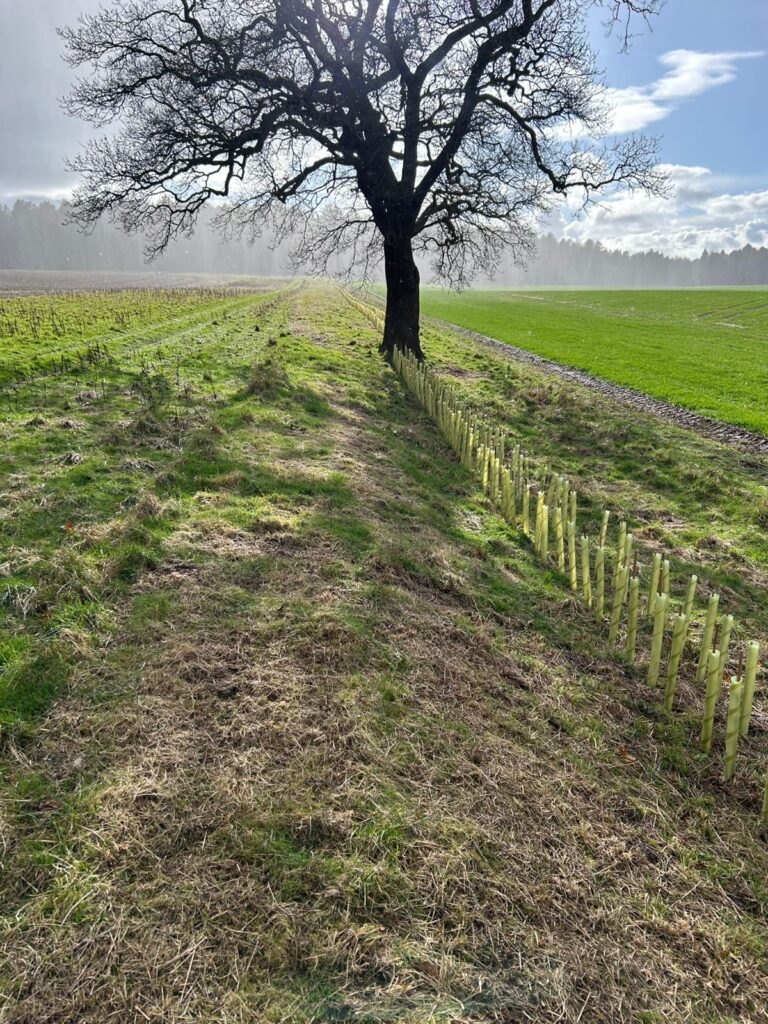
Across the project area, we are creating flower-rich margins, tussocky grass strips, winter bird seed plots and new ponds, while planting hedgerows and improving existing ones. Together, these measures create better places for farmland wildlife to feed, breed and shelter.

This work is being delivered in conjunction with dedicated countryside experts and wildlife charities, specifically the Game and Wildlife Conservation Trust (GWCT) and Oakbank, and is part funded through Countryside Stewardship Mid Tier and the 2024 Sustainable Farming Incentive.

Beyond this project, we manage other existing farm environmental measures covering more than 100 hectares, including watercourse buffer strips, flower-rich margins and low-input grassland, as well as additional fields in the Sustainable Farming Incentive focused on soil health.

Project highlights
  • More than 700 hectares will be managed for farmland bird and biodiversity recovery.
  • The project will deliver landscape-scale habitat improvements for birds, pollinators and other wildlife.
  • 1,900 metres of new hedgerow will improve shelter, connectivity and nesting habitat while also creating wildlife corridors.
  • 13 hectares of flower-rich habitat will support insects and other beneficial wildlife.
  • 9 hectares of winter bird seed plots will provide vital food in the colder months.
  • 7.5 hectares of tussocky grass margins and strips will provide shelter and boost insect life.
  • A 1 hectare lapwing nesting plot will support this threatened species.
  • Six monitoring transects will track birds, insects and rare arable flowers, with two outside the project area as controls

Why it matters

  • Farmland wildlife is a strong indicator of environmental health, and a richer mix of habitats helps species thrive throughout the year.
  • With many farmland species in long-term decline, practical action on working farms can make a real difference.

What we are doing

  • Planting more than 1,900 metres of new hedgerow to create cover, nesting habitat and wildlife corridors.
  • Improving 17 kilometres of existing hedgerow to increase its value for wildlife.
  • Creating and managing more than 29 hectares of field margins for food, shelter and breeding space.
  • Creating four new ponds to add wet habitat and support a wide range of species.
  • Creating a 1 hectare nesting area for lapwing.
  • Using best-practice management, where appropriate, to improve breeding success for vulnerable farmland wildlife.
 How we will track progress
  • Regular surveys of insects, wildflowers and farmland birds, with control transects outside the project area.
  • Dawn and dusk counts to track breeding birds over time.
  • Fixed-point photography and drone imagery to record habitat change.
  • Record data to show what is working and where we can go further.
Explore

Our Landscape

environment

Sustainability is at the heart of Welbeck’s future

Search
Follow Us

Subscribe to receive the latest news from The Welbeck Estate.

Subscribe to receive the latest news from The Welbeck Estate.