

The Duke took an interest in the founding and upkeep of a fire brigade for the estate and, whenever he was at home at the Abbey, he was officially recognised as the Captain of the Brigade. In order to keep everyone on their toes, he would even take it upon himself to trigger surprise drills by ringing the bells without having told anyone he would be doing so. He had such pride in the Fire Brigade that important guests were often taken on special visits to see where the firefighters were stationed. This included the then Prince and Princess of Wales — later Edward VII and Queen Alexandra — who were not only shown around the engines and equipment but for whom the alarms were also run nonstop for a whole hour.
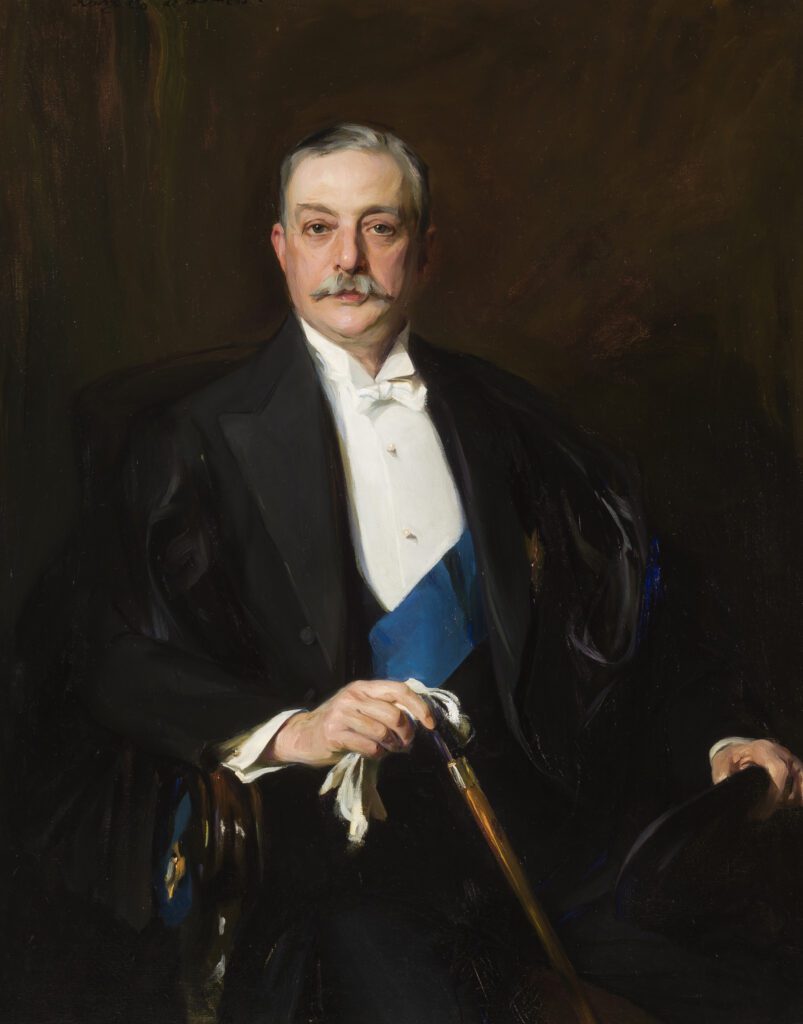
In his enthusiasm, he made sure the Brigade always had access to the newest technology. In the 1890s, an electric fire alarm system was installed at the Abbey which meant that the alarms there only needed to be triggered in one place and the whole system would respond.
It wasn’t just the technology that it was important to get right in setting up the Brigade, however. A superintendent was needed to handle the day-to-day running of the Brigade. In a letter about this, the estate’s agent Mr Turner wrote “I don’t want a smart fancy man & one likely to give himself any airs, but a sharp intelligent workman.” Instead, he wanted “a good, steady, trustworthy man”.
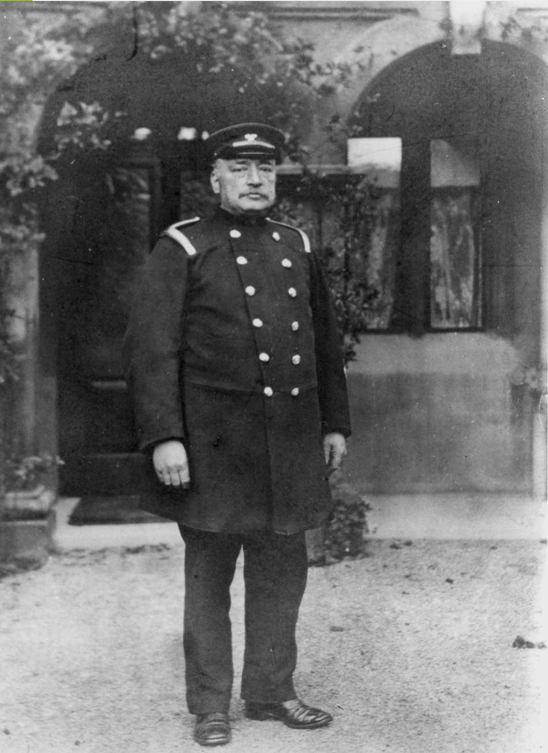
The man who fit the bill turned out to be Edward George Hamlyn. He was born c.1851 and, in his early life, was an engineer in London, but by the age of just 26, he had been offered the role at Welbeck, where he stayed for more than 40 years. His family remained on the estate for decades, and the house they lived in is still known as Hamlyn Lodge.
When he arrived at Welbeck, he inspected the firefighting systems, then in their infancy, and made some observations for Mr Turner to pass along to the Duke for his consideration. Among other suggestions, he pointed out that “the horses ought to be kept as near as possible to the engines” and that “all the men appointed members of the Brigade should live in the immediate neighbourhood”. Everything was done to his specifications.
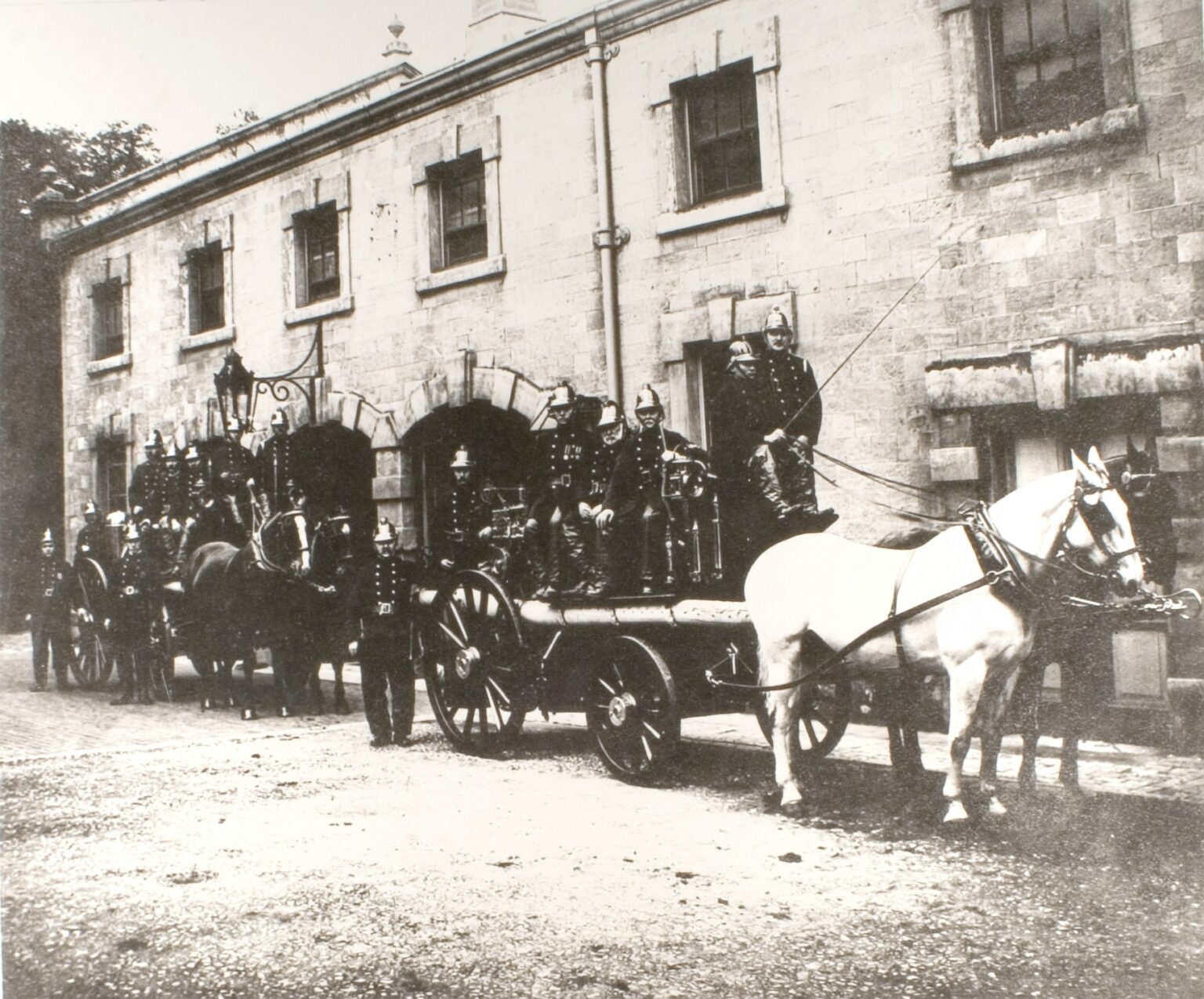
The Fire Brigade was made up of a mix of volunteers and professionals. This meant that while some members of the Brigade were dedicated firefighters and watchmen, others balanced this responsibility with other roles on the estate. For example, at the tail end of the 19th century, Mr Charles Denny was both a firefighter on the estate and an under butler working at the Abbey.
The Fire Brigade were called out quite often, with some particularly notable callouts over the years.
On 20th December 1893 at 10:30 in the morning, there was a fire in the kitchen at the Abbey that set light to a beam in the ceiling. By the time Mr Hamlyn arrived with the hand pumps and extinguishers after being summoned, by what he calls in his report a “telephonic message”, the fire was already being dealt with by two of the household staff who doubled as members of the brigade (Mr Norman and Mr Levick). This fire was dealt with so quickly and efficiently once Mr Hamlyn arrived that there is no record of it even slowing down the kitchen’s preparations for Christmas that year.
The ultimate test of the Fire Brigade’s bravery and abilities came in October 1900 with the fire in the Oxford Wing at the Abbey.
Undeniably, the Welbeck Fire Brigade were capable, well-trained, and a credit to the estate and the surrounding areas, as they handled emergencies ranging from the stereotypical cat up a tree to the very worst days of people’s lives. Without them, the Welbeck Estate as we know it today would simply not exist.
Emilia Crawley is a Sheffield native and an MA English Literature student at the University of Sheffield with a focus on 19th century gothic. In May 2026 she completed a work experience placement at Welbeck Abbey in the role of Social History Researcher on the Welbeck Names Database project.