

Lord Titchfield decided to marry an heiress. He chose Henrietta Scott, eldest daughter of General Sir John Scott of Balcomie, soldier, landowner, politician — and a prodigiously successful gambler who had amassed a fortune of £500,000, equivalent today to about £65,000,000. Sir John died before the birth of the youngest of his three daughters, having made Henrietta his principal heir, the sisters known as The Rich Miss Scott, The Witty Miss Scott, and The Pretty Miss Scott.
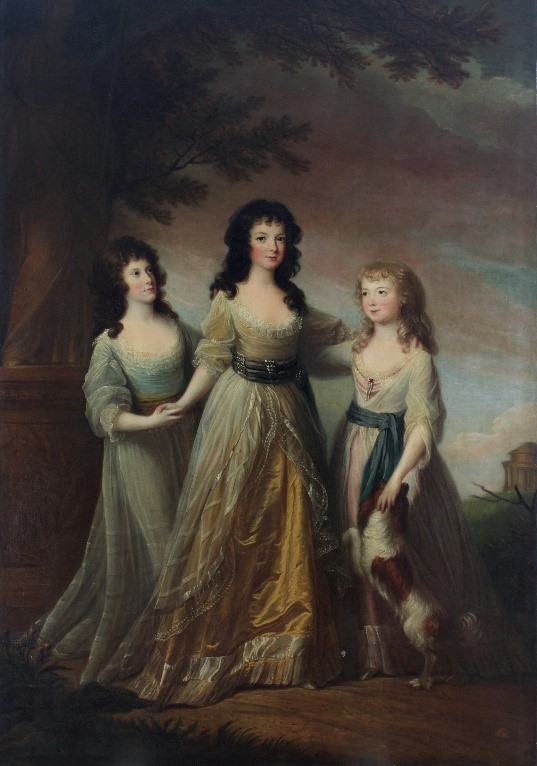
The new Duke, who had added his wife’s surname to his own, swiftly set about discharging his father’s debts, but records show that his wife retained full control of her financial resources. In later life, she made copious notes on the running of her households, farms, woodlands and properties across Britain, noting expenditure and income down to the last farthing. She and her husband developed the Kilmarnock coal mines in Ayrshire, introducing the first steam locomotive to Scotland to take coal to Troon Harbour, which they had built for the purpose.
They entertained prodigiously at Welbeck Abbey, Duchess Henrietta noting precisely the cost of food and drink, and the amount of china the servants broke. Relationships with the children were clearly close, though perhaps there was a sense of a family apart from others. Three of the five daughters married, but only one had children. None of the four sons married. The eldest died while a young man, Lord John the second son, became the 5th Duke of Portland, a famous recluse, the Underground Man.
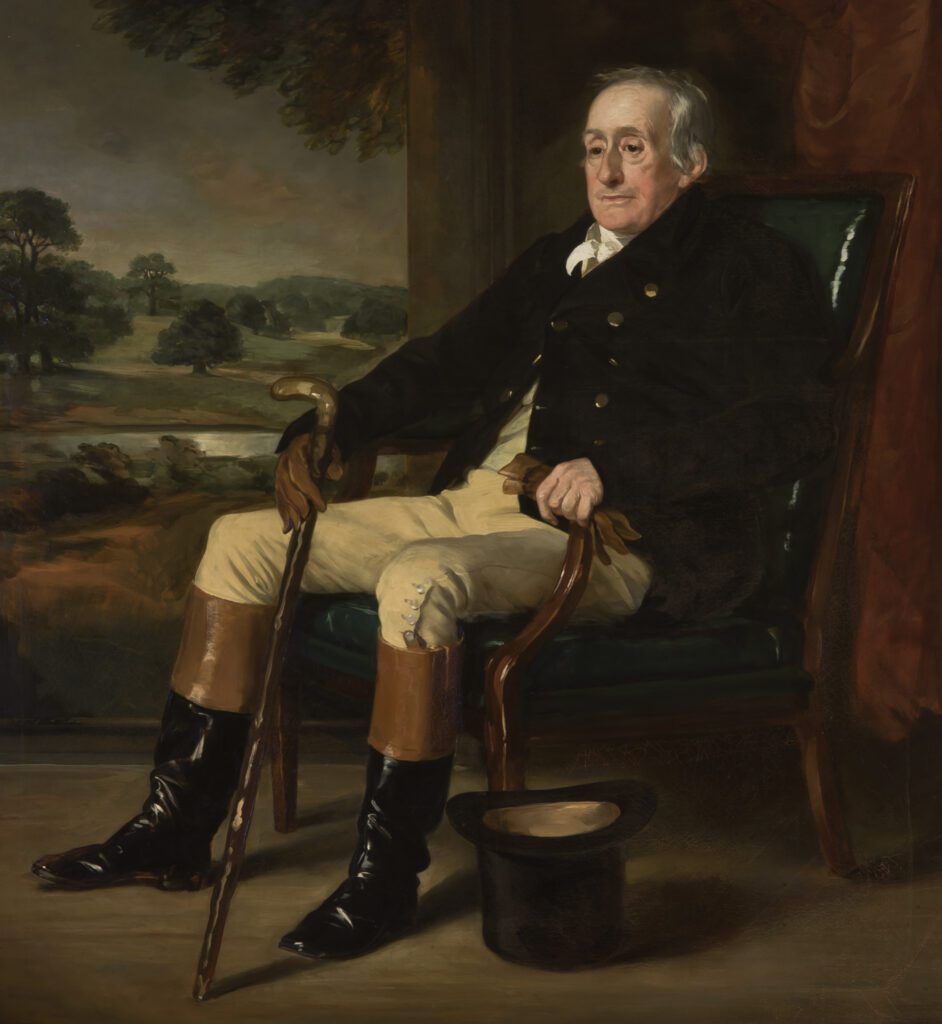
Lord George Bentinck, Lord Paramount of the Turf, applied himself first to horse racing and breeding, and then with equal intensity to politics. Though the youngest son, Lord Henry, was an MP for eleven years, he spoke only once in the House, otherwise devoting himself obsessively to hunting with dogs.